



Mortgage Protection
If you have a partner, loved ones and/or dependants who rely on your salary completely or on your salary as well as their's– and the roof over your heads is funded by a mortgage – making plans in advance as to how it will be paid in the event of your unexpected death is crucial. If you’re looking to take out life insurance, one of the big decisions to make is whether to apply on a joint or single basis. A joint life insurance policy insures two lives on a single basis, while single life policies mean you have two separate life plans. We can help you with this decision.

No-one likes to think about becoming seriously ill. We all prefer to believe nothing bad will ever happen to us. But the sad truth is that one in six women and one in five men will have a serious medical condition at some point in their lives. Being off work with a long-term illness is as financially devastating as being made redundant. The last thing you need when you’re laid low is to be worrying about how to pay the bills. This is where critical illness insurance comes in.
Critical illness insurance pays out a lump sum if you’re diagnosed with one of a series of serious medical conditions such as some forms of cancer, heart attack and stroke. It will also pay out if you are permanently disabled as a result of injury or illness. The money is tax-free and can be used to cover your mortgage or other loans while you’re undergoing treatment. You could even pay for your home to be adapted to cater for your needs. You’ll often be offered critical illness insurance at the same time as taking out life insurance, which makes it slightly cheaper. On the whole, critical illness cover is expensive as those who do make a claim often receive many thousands of pounds.
Accident, sickness and unemployment (ASU) insurance provides financial protection if you are unable to work as a result of an accident or ill health, or in the event that you become unemployed through no fault of your own. There are many different ASU policies available, including mortgage payment protection insurance (MPPI).
If you lost your job or couldn't work as a result of ill health, could you keep up your mortgage repayments and other financial outgoings? Without substantial savings, most of us would struggle to do so. ASU policies exist to give people peace of mind that they could manage financially in an emergency.
ASU policies usually can only be claimed on for a maximum of one or two years. They can either be used to pay mortgage payments or loan payments, or general bills. Similarly, mortgage payment protection insurance (MPPI) would usually be paid out to you directly. You would then be responsible for meeting your mortgage payments. Mortgage payment protection insurance (MPPI) is taken to cover your mortgage repayments and can usually cover an amount over and above the actual payments to your lender for associated bills, etc. usually around 25% extra.
This Payment Protection Insurance is optional. There are other providers of Payment Protection Insurance and other products designed to protect you against loss of income. For impartial information about insurance, please visit the website www.moneyadviceservice.org.uk
For Accident sickness & unemployment insurance we can advise on products from a panel of providers.

Personal Cover
If you have a, partner, loved ones and/or dependants who rely on your salary completely or on your salary as well as their's for covering the family running costs, child care etc. Then making plans in advance as to how it will be paid in the event of your unexpected death is crucial. If you’re looking to take out life insurance, one of the big decisions to make is whether to apply on a joint or single basis. A joint life insurance policy insures two lives on a single basis, while single life policies mean you have two separate life plans. We can help you with this decision. Usually life insurance for family protection is on a level term basis.
Critical illness insurance pays out a lump sum if you’re diagnosed with one of a series of serious medical conditions such as some forms of cancer, heart attack and stroke. It will also pay out if you are permanently disabled as a result of injury or illness. The money is tax-free and can be used any way you wish – to pay for private medical treatment or to cover your household bills while you’re undergoing treatment. You could even pay for your home to be adapted to cater for your needs. You’ll often be offered critical illness insurance at the same time as taking out life insurance, which makes it slightly cheaper. On the whole, critical illness cover is expensive as those who do make a claim often receive many thousands of pounds.

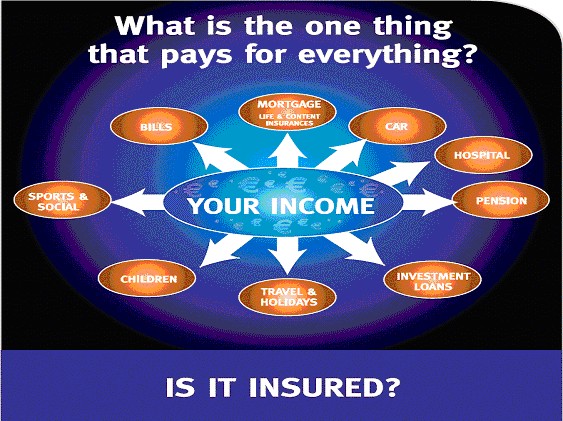
Income Protection cover, as its name suggests, is designed to ensure you will continue to receive an income if you are unable to work due to illness or disability. There are several different types of cover available, and it is important to understand the difference between them in order to find the right policy to suit your needs.
This will depend on how long you require your policy to pay you an income. Short-term Income Protection policies, which are otherwise known as ASU as stated above. Long term Income Protection, however, will usually provide a regular income if you are unable to work due to illness or disability until you are well enough to return to work, or until the end of the policy term. Unlike most Short Term Income Protection policies it will generally not cover you if you are made redundant. If you claim on an Income Protection policy, there is a waiting period before it will start to pay out and you can usually choose how long you want this to be. This waiting period, usually known as the 'deferred period'.
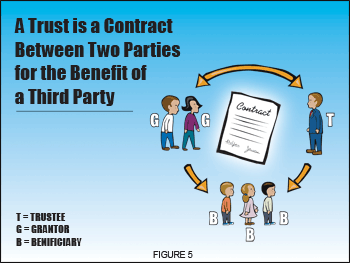
A trust is a way of managing assets (money, investments, life insurance and insurances, land or buildings) for people. There are different types of trusts and they are taxed differently.
Trusts involve:
• the ‘settlor’ - the person who puts assets into a trust
• the ‘trustee’ - the person who manages the trust
• the ‘beneficiary’ - the person who benefits from the trust
What trusts are for
Trusts are set up for a number of reasons, including:
• to control and protect family assets
• when someone’s too young to handle their affairs
• when someone can’t handle their affairs because they’re incapacitated
• to pass on assets while you’re still alive
• to pass on assets when you die (a ‘will trust’)
• under the rules of inheritance if someone dies without a will (in England and Wales)
What the settlor does
The settlor decides how the assets in a trust should be used - this is usually set out in a document called the ‘trust deed’.
Sometimes the settlor can also benefit from the assets in a trust - this is called a ‘settlor-interested’ trust and has special tax rules. Find out more by reading the information on different types of trust.
What trustees do
The trustees are the legal owners of the assets held in a trust. Their role is to:
• deal with the assets according the settlor’s wishes, as set out in the trust deed or their will
• manage the trust on a day-to-day basis and pay any tax due
• decide how to invest or use the trust’s assets
If the trustees change, the trust can still continue, but there always has to be at least 1 trustee.
Beneficiaries
There might be more than 1 beneficiary, like a whole family or defined group of people. They may benefit from:
• the income of a trust only - eg from renting out a house held in a trust
• the capital only - eg getting shares held in a trust when they reach a certain age
• both the income and capital of the trust.
The financial conduct authority does not regulate tax, trust and estate planning. If you need advice in this area then we can introduce you to a firm who can provide advice on this topic.
Building & Contents Insurance

Buildings insurance is essential to protect your home from unforeseen circumstances such as fire, flood and the wrath of the elements. It covers the bricks and mortar of your home along with any fixtures and fittings within the property.
Contents insurance, on the other hand, protects the possessions within your home.
While buildings insurance isn't compulsory, if you have a mortgage it is likely to be one of the conditions imposed by your lender. As soon as you buy a house and exchange contracts, you become legally bound and responsible for the property.
You probably can't imagine life without a television, washing machine or laptop computer, which is why it makes sense to insure the contents of your home. Contents insurance - unlike buildings insurance - isn't compulsory, but most of us would struggle to replace our precious possessions if they were stolen or damaged by fire or a flood.
Contents insurance covers your home contents against loss or damage by theft or attempted theft, fire, explosion, lightning or earthquake. It will also insure against water leakage, storm or flood damage.


This is both the Building Cover and Contents cover combined. It doesn't matter whether you live in a one-bedroom flat or a five-bedroom detached house, your home is no doubt your castle. So it's important to make sure that you have the right protection in place in case something should go wrong.
What if there was a fire or the roof was damaged in a storm? Would you be able to pay for the repairs? And where would you live if your house was uninhabitable? Your home also contains some of your most valuable possessions. Could you afford to replace your flat screen TV or your jewellery collection if you were the target of burglars?
For Buildings & contents insurance we can advise on products from a panel of providers.
Specific protection for your rental properties
As a landlord, you will need a particular type of insurance for properties you rent out to tenants. This cover usually includes the same type of protection as your usual house insurance, such as cover for buildings and contents in the event of a range of circumstances.
However, you need certain extra cover as a landlord, including for:
• Non payment of rent
• Damage to your property (by the tenant)
• Loss of earnings/rehousing costs if the tenants have to move out (following an insured event)
• Liability for accidents in your property causing injury
You can get cover for multiple properties, which can often work out cheaper if you have a portfolio.